Mainstay and Lockbox Product Vision
A community continuity scenario
A community, resort, campus, or co-working facility may still have people, staff, devices, local power, and a local network even when outside services are slow or unavailable. A payment provider may be unavailable. A booking or access system may be offline. A registry, health-record system, or cloud application may be temporarily inaccessible. The community still needs to coordinate the work in front of it.
The people, funds, and records have not disappeared. Access to the distant infrastructure has. This is the moment Mainstay is intended for: providing a local point of continuity so a community can keep using the resources already within reach, coordinate through nearby infrastructure, and reconcile with external systems when connectivity returns.
Mainstay is the future unified local-first application for keys, records, payments, community resource coordination, and continuity. Lockbox is the hardware-first appliance that gives Mainstay and its supporting services a dedicated local home.
The Mainstay product family is intentionally made of sibling projects. Each one should remain useful on its own, while also fitting into a larger local appliance profile.
Good boundaries, not barriers. Each sibling retains a clear responsibility, authority boundary, and failure domain. Open protocols let them cooperate and remain replaceable without turning that separation into an obstacle to continuity.
The user path should remain simple. In ordinary conditions, someone can use a web-connected service. If the hosted service, provider, or outside connectivity is limited, Mainstay should be able to use local Lockbox services without becoming a separate special-purpose app.
The existing sibling architecture is the foundation Mainstay will unify:
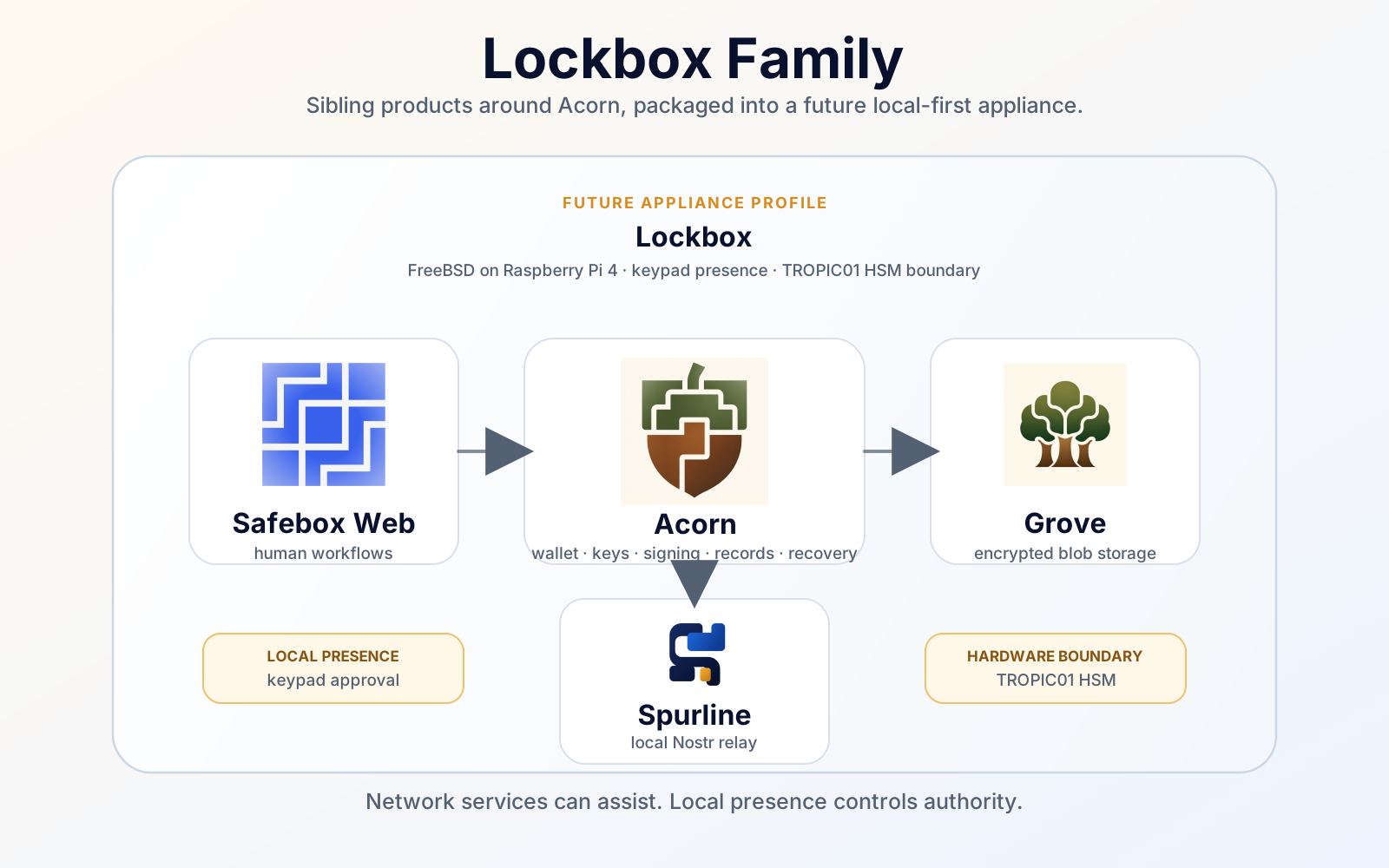
Clear is the newest optional sibling and is not yet shown in this first architecture graphic. It sits beside Grove and Spurline as a local service that Mainstay can use and Lockbox can host.
Continuity at a glance
The letter-sized poster summarizes the application, appliance, component roles, and what to do when external services are unavailable.
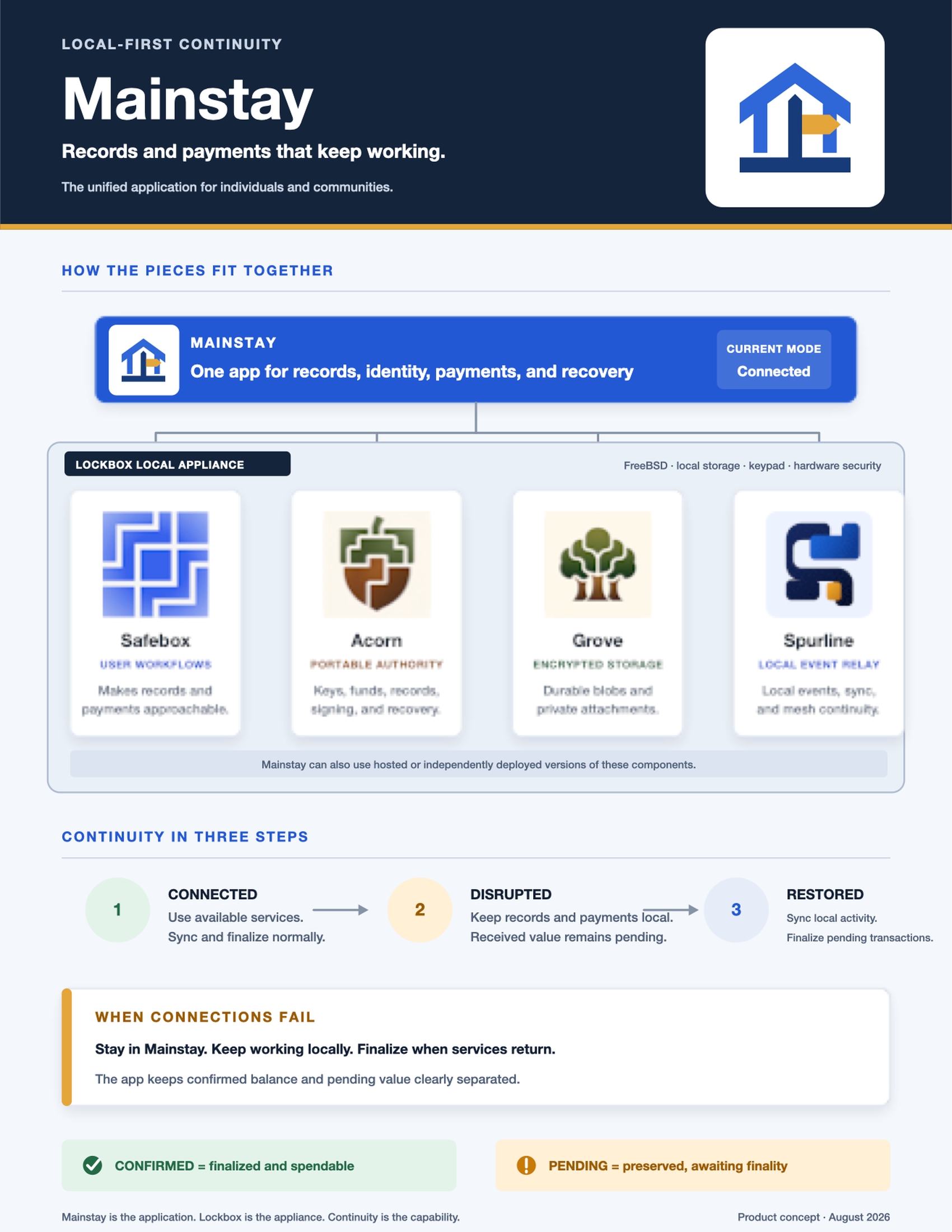
Download the print-ready PDF Open the vector version
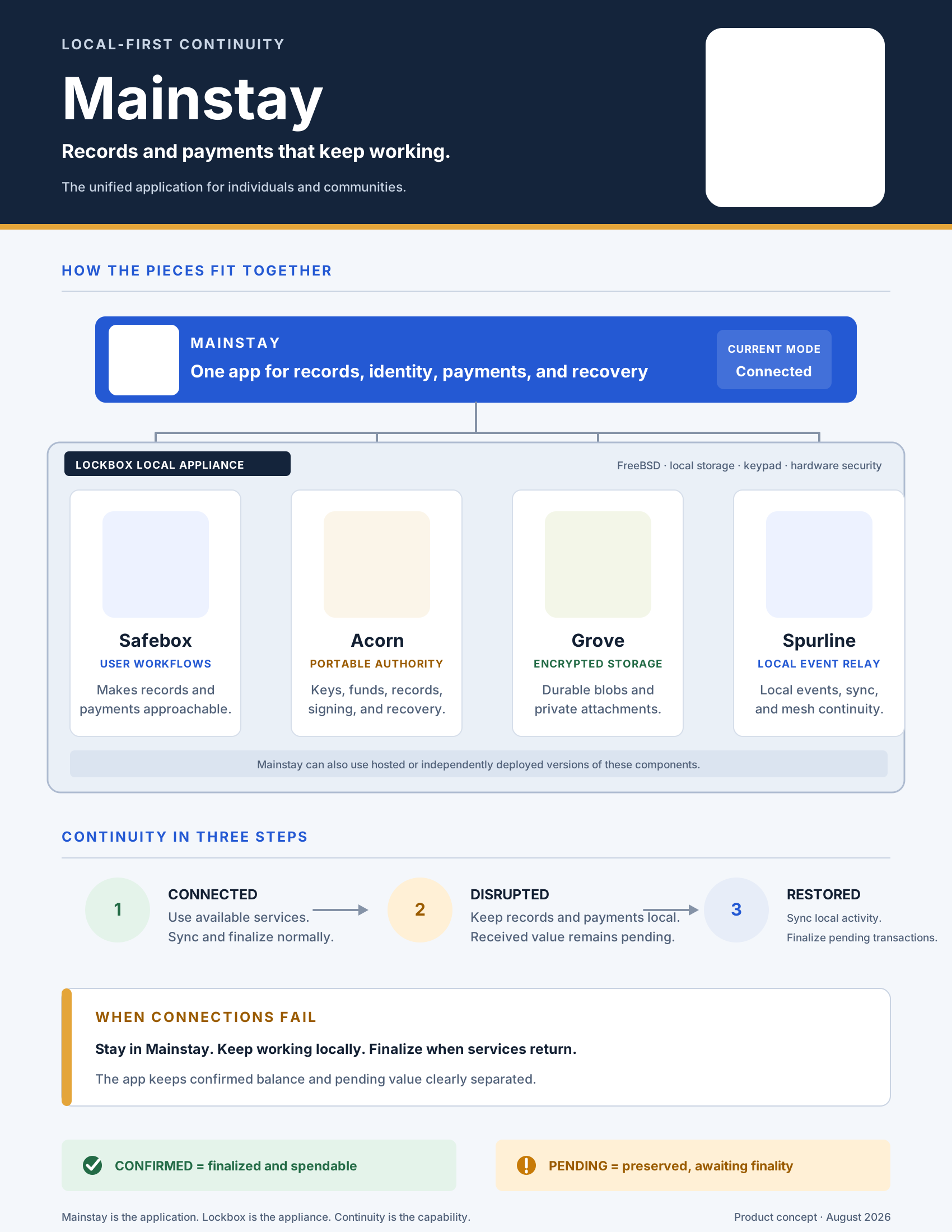
The product model
- Mainstay is the unified application and primary user entry point.
- Lockbox is the dedicated local appliance that runs Mainstay and its supporting services.
- Continuity is the capability: records and payments keep working across connected, local, mobile, and community conditions.
- Clear is the optional local mint for organizations that want bounded currencies or voucher systems without Bitcoin or Lightning.
Mainstay can also run without dedicated Lockbox hardware. Lockbox is the integrated deployment for people and communities that want durable local operation, hardware-backed controls, and appliance simplicity.
The family
Acorn
The wallet, key, signing, record, and recovery runtime at the center of the stack.
Safebox Web
The current standalone app for custody, records, payments, handles, and workflows, and an important foundation for Mainstay.
Grove
A local-first Blossom server for opaque, content-addressed encrypted blobs and attachments.
Spurline
A local-first Nostr relay for event continuity, community infrastructure, and mesh synchronization.
Clear
An optional local-first Cashu mint for organization-defined points, vouchers, and internal economies without Bitcoin or Lightning settlement.
Mainstay
Mainstay will provide one coherent entry point across these sibling products. It does not replace their protocol boundaries or prevent them from remaining independently useful.
The appliance direction
Lockbox packages these components into a local runtime for individuals, organizations, and communities. A deployment may optionally include Clear when it needs a locally governed currency. The initial target platform is FreeBSD on Raspberry Pi 4 with a physical keypad and a TROPIC01 HSM.
That hardware direction matters. The keypad provides local presence for unlock, approval, and recovery flows. The HSM provides a hardware-backed boundary for sensitive key material and signing operations. The web interface can request authority, but local hardware should govern high-risk actions.
Network services can assist. Sensitive actions stay locally approved.
Continuity modes
Lockbox gives the user app four plain operating modes:
| Mode | User meaning |
|---|---|
| Connected Mode | Normal connected use with hosted services, relays, external mints, optional Clear currencies, synchronization, and updates available. |
| Local Mode | Direct local use of the Lockbox appliance, including any configured Clear mint, when upstream internet or hosted services are unavailable. |
| Mobile Mode | A phone or nearby device supplies temporary upstream connectivity while Lockbox keeps sensitive approvals local. |
| Community Mode | Nearby Lockboxes or participating devices exchange signed events, encrypted records, replicas, and provisional payment messages locally. |
The current Safebox Web app can start by showing Connected Mode. Later versions can determine mode from service availability, including eligible network paths, local pairing, bridge state, and community mesh participation.
Local credits and vouchers with Clear
Clear extends the Mainstay family beyond globally connected payments. It is an optional local-first mint for organizations and communities that want to create their own bounded points or voucher system without adopting Bitcoin or running Lightning infrastructure.
A Clear currency has its own governing authority, authorized treasurers, operational mint, ledger, and recognition network. The organization decides what the currency represents and which providers accept it. Clear provides private Cashu bearer proofs, supply accounting, swaps, spent-state checks, and retirement.
This can support:
- church meal, transportation, or benevolence vouchers;
- food-bank credits recognized by participating providers;
- campus, event, camp, member, or community-program allocations; and
- a resort payment system for guest credits, staff allowances, shops, restaurants, and activities on the resort's own network.
In the resort example, the resort treasury governs issuance and settlement. A local Clear mint issues the resort-specific currency. Guests and staff hold proofs in Acorn-backed wallets, participating services accept them, and providers return proofs for retirement and reimbursement or internal accounting.
Organization establishes policy
            -> treasurer issues vouchers
            -> people use recognized local providers
            -> providers return proofs for retirement and settlement
The currency is not legal tender and does not need universal acceptance. Ordinary money can fund the program and settle with providers, while Clear coordinates the purpose-specific allocation in between with cash-like possession, direct transfer, voluntary recognition, and privacy.
A locally available Clear mint also provides a stronger form of local payment continuity. It can validate, swap, issue, and retire its own currency entirely inside the local network. By contrast, proofs from an unavailable external mint remain provisional until that mint returns. Mainstay should show this difference clearly: local Clear finality is not the same state as a pending Continuity Payment.
Clear remains optional. Mainstay should present configured currencies without combining them, and Lockbox should never silently create a currency or imply that operating an appliance grants authority to issue one.
Continuity Payments
Continuity Payments are a future Lockbox capability for local commerce when normal payment infrastructure is unavailable.
If a mint, Lightning path, hosted service, or upstream internet connection is temporarily unavailable, nearby Acorns should still be able to transfer previously issued ecash to one another. The receiving Acorn can hold that value as provisional local payment material, and refresh or swap the proofs with the mint when connectivity returns.
This is especially important for community continuity. A remote community might lose satellite connectivity while still having a local network, local devices, and local Lockbox services. Continuity Payments let local activity continue with clear settlement boundaries:
- local transfer can happen now;
- mint finality is pending;
- reconciliation happens when the mint is available again.
A practical example is a cruise ship, remote community, resort, or shared facility that normally uses a mint connected to external payment services. If the outside link is unavailable, rationed, or unreliable, the people nearby may still be able to reach each other over a local network or mesh. Continuity Payments would let them keep making small local payments from ecash already held by their Acorns, then refresh or reconcile those proofs with the mint when the outside link returns.
When the mint is offline, a payment may not be exact because proofs cannot be swapped for change. Safebox Web should show the closest transferable amount, the difference from the requested amount, and ask the user to approve the provisional transfer.
Product roles
Mainstay is the unified application. It coordinates keys, records, payments, synchronization, and continuity modes without becoming the system of record.
Acorn is the protocol-first component for safeguarding user-controlled keys, funds, and records. It provides signing, encrypted wallet state, transfer flows, and recovery below the application layer.
Safebox Web is the current user app and foundation for Mainstay. It gives people browser-based workflows without becoming the system of record.
Grove is the blob-storage service. It stores opaque bytes and attachments without needing to understand plaintext records.
Spurline is the relay service. It preserves relevant Nostr events locally and creates a base for local continuity, network synchronization, and future mesh operation.
Clear is the optional local mint. It supports independently governed points, vouchers, and internal economies while remaining separate from Bitcoin, Lightning, and external Cashu mints.
Lockbox is the hardware-first appliance. It runs Mainstay and the family locally with predictable services, durable local storage, health checks, hardware-backed controls, and a clear operator experience.
Why this matters
The goal is not to make every user become an infrastructure operator. The goal is to make local continuity practical when it matters.
An individual, family, organization, or community should be able to run a credible local home for keys, records, funds, storage, and relay state without being trapped by any single application, hosted operator, relay, or storage provider.
Acorn gives the stack portable protocol authority. Safebox Web provides the current application foundation. Grove preserves encrypted blobs. Spurline preserves events. Clear can support bounded local economies. Mainstay becomes the unified entry point, and Lockbox brings the complete experience together as a local appliance.